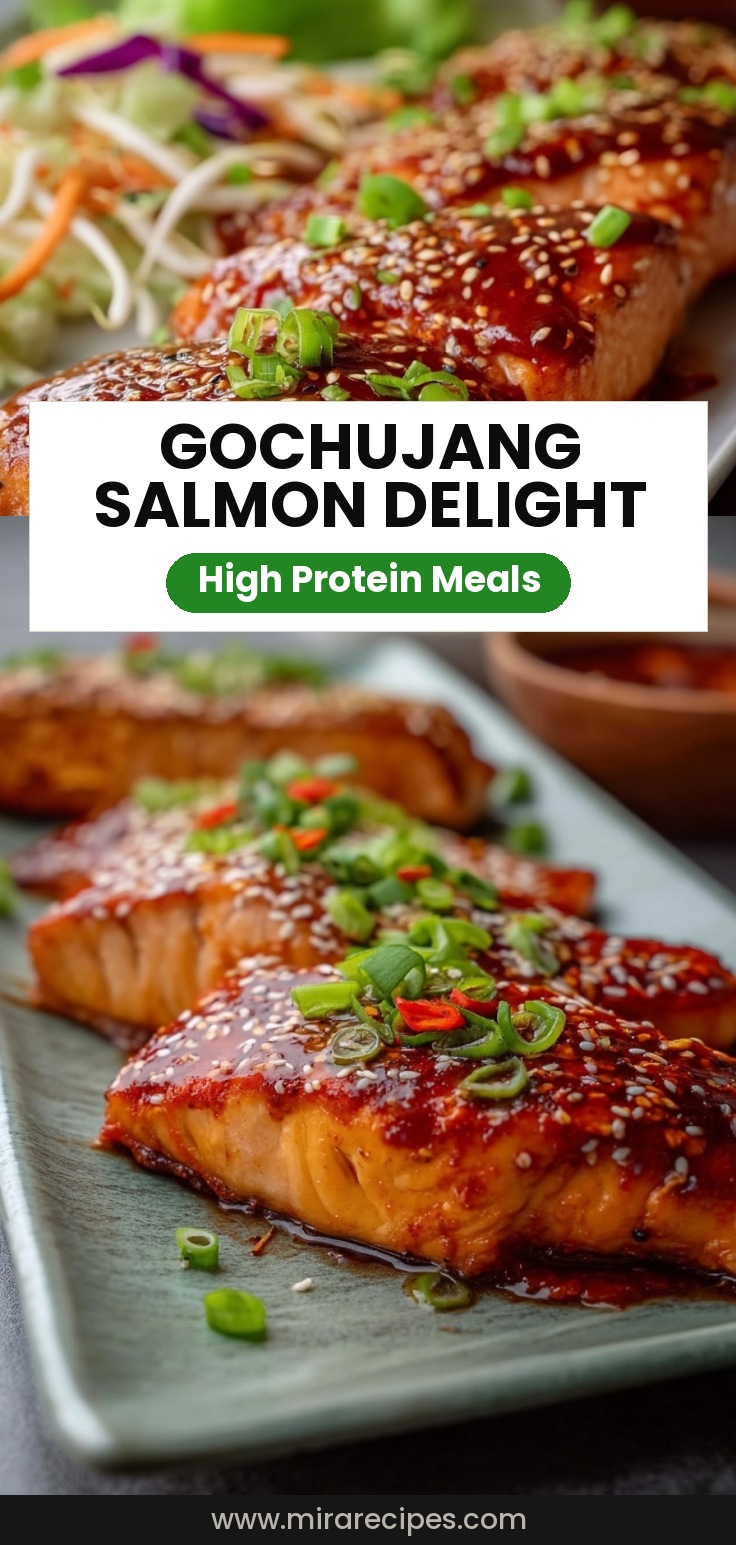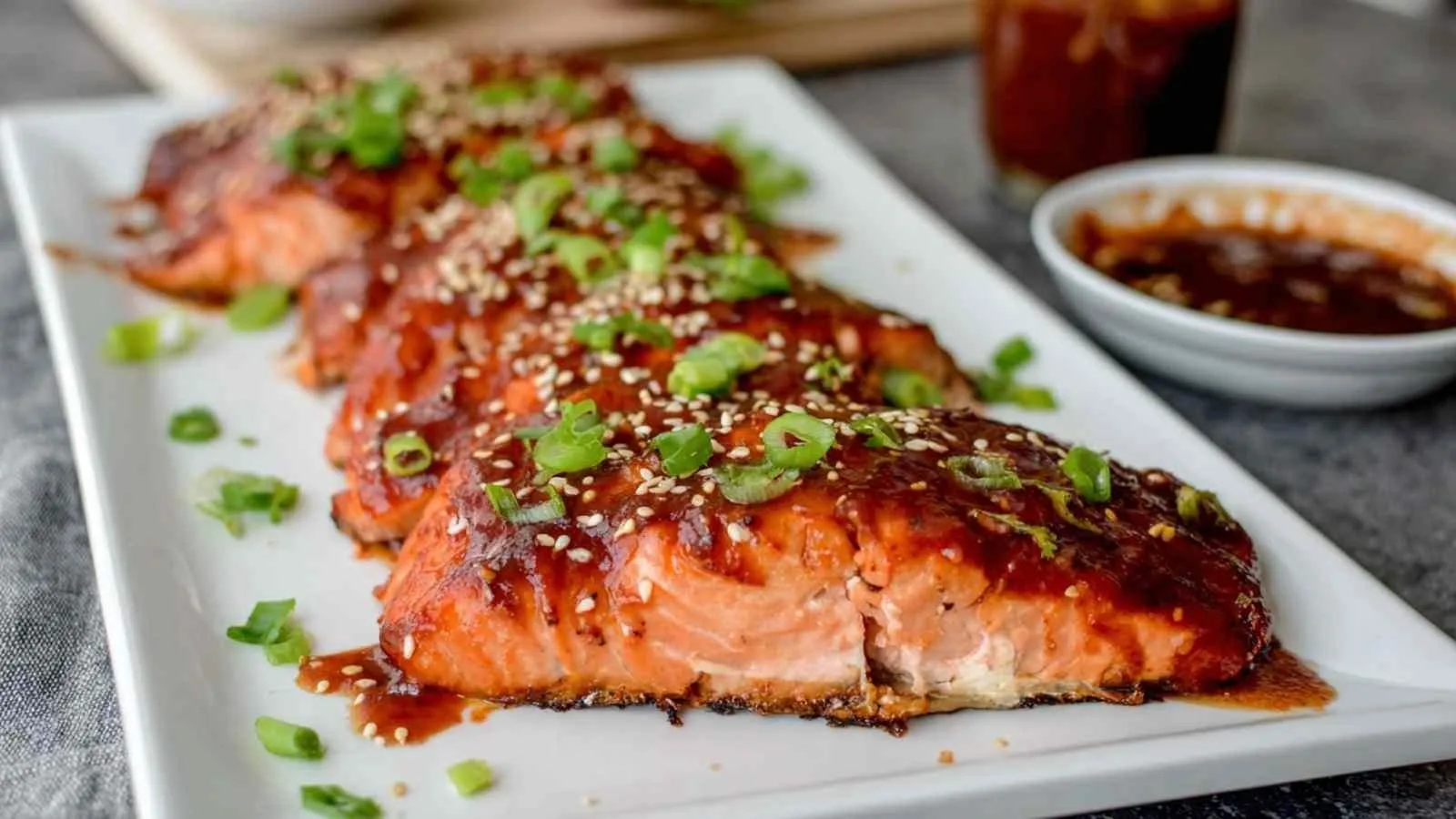
Gochujang salmon is about to become your new favorite weeknight dinner. This Korean-inspired glaze transforms simple salmon fillets into something bold, spicy, and deeply savory. I’ve thrown this together on busy Tuesday nights when I had zero energy left, and it never lets me down.
My teenagers are tough critics, but this one? They ask for it on repeat. The gochujang glaze hits every note: a little heat, a little sweetness, and that rich umami depth that makes you feel like you actually know what you’re doing in the kitchen.
Table of Contents
Ingredients for Gochujang Salmon
I always keep gochujang stocked in my fridge. It’s one of those ingredients that punches way above its weight, and for this gochujang salmon, you only need a handful of pantry staples to build serious flavor.
- 3 tbsp gochujang (Korean chili paste) I recommend starting with 1 1/2 tbsp if you prefer mild heat
- 1/2 tsp garlic powder
- 2 tsp low-sodium soy sauce my go-to for keeping sodium in check without losing flavor
- 2 tsp honey (maple syrup works great too)
- 1 tbsp rice wine vinegar
- 1 1/2 tsp sesame oil in my experience, don’t skip this; it adds incredible aroma
- 1/2 tsp salt
- 1/4 tsp black pepper
- 1 to 1 1/2 lbs salmon fillets (skin-on, cut into 4 to 6 oz portions)
- Sesame seeds for garnish
- Green onion, thinly sliced, for garnish
Step-by-Step Instructions
I recommend patting the salmon completely dry before glazing. It’s a small step that makes a real difference, helping the sauce cling to the fish and giving you that gorgeous caramelized finish under the broiler.
Step 1: In a mixing bowl, whisk together the gochujang, garlic powder, soy sauce, honey, rice wine vinegar, sesame oil, salt, and pepper until the glaze is smooth and fully combined. Taste and adjust seasoning if needed.
Step 2: Pat the salmon fillets dry with a paper towel and place them skin-side down on a foil-lined baking sheet. Spoon the glaze evenly over each fillet, spreading it all the way to the edges.
Step 3: Position your oven rack 6 to 8 inches from the broiler element and preheat the broiler fully before adding the salmon. This step matters putting the fish under a cold broiler will steam it instead of caramelizing the glaze.
Step 4: Once the broiler is fully preheated, slide in the baking sheet. Broil for 5 to 7 minutes, rotating the pan halfway through. Keep a close eye on it. If the glaze starts darkening too fast, drop the pan to a lower rack immediately. Thinner fillets (under 1 inch) are typically done in 4 to 5 minutes; thicker fillets closer to 7 to 8 minutes.
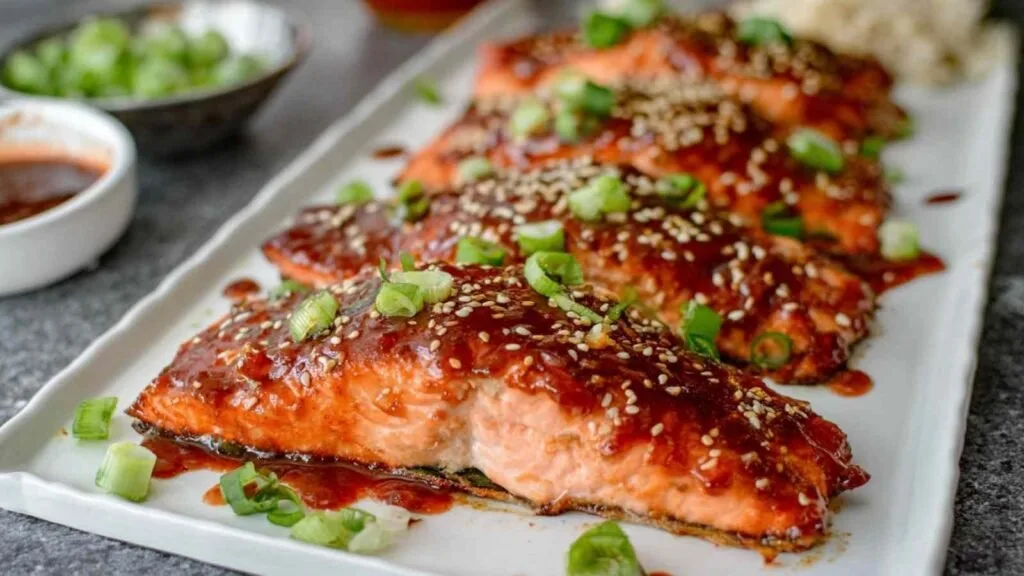
Step 5: The salmon is done when it flakes easily with a fork or reads 125 to 130°F on a meat thermometer for medium-rare, or 145°F for fully cooked. Let it rest for 5 minutes before serving. Garnish generously with sesame seeds and sliced green onion.
What to Serve with Gochujang Salmon
The bold, spicy-sweet flavors of this dish love a cooling or starchy companion. Here are my favorite pairings that round out the meal perfectly.
Steamed Jasmine Rice: A classic pairing. Fluffy rice soaks up every drop of that gochujang glaze and keeps the meal satisfying and complete. If you want to turn this into a full bowl-style dinner, my One Pot Salmon and Rice is a great reference for building that format.
Cucumber Salad: A cool, lightly dressed cucumber salad cuts through the richness of the salmon and adds a refreshing crunch. Try pairing it alongside my High Protein Cucumber Salad for a crisp, protein-boosted side.
Roasted Broccoli: Charred broccoli adds a slightly bitter, nutty note that plays beautifully against the umami-forward glaze. My Chicken and Broccoli Bowls shows exactly how to roast broccoli to perfection if you need a reference.
Asian Sesame Salad: A light sesame-dressed salad brings a nutty, tangy balance to the plate. My Asian Sesame Chicken Salad uses similar flavor profiles and doubles as an easy make-ahead side.
Quinoa: For extra protein without the carb-heavy base, quinoa is a smart swap. Check out my Shrimp Quinoa Bowl for inspiration on how to season it to complement Asian-inspired dishes.
Miso Soup: A warm, light bowl of miso rounds out the Korean-inspired flavors and adds a comforting savory element without overwhelming the plate.
Storage and Serving Tips
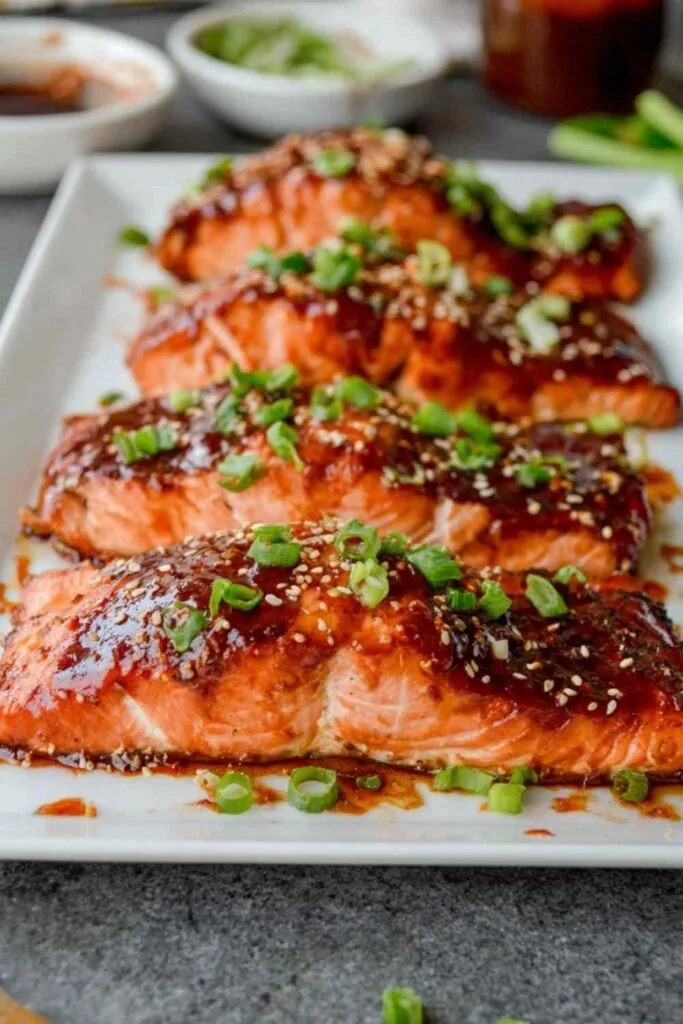
Let the salmon cool completely before transferring it to an airtight container. It keeps well in the refrigerator for up to 3 days, making it a solid option for meal prep lunches throughout the week.
To reheat, I recommend a low oven at 275°F for about 10 minutes rather than the microwave. The microwave tends to dry salmon out quickly. A small splash of water in the container before covering helps retain moisture during reheating.
Pro tip: leftover gochujang salmon is incredible flaked over rice bowls, tucked into lettuce wraps, or served cold over a simple salad the next day. It honestly tastes better the next morning when the glaze has had time to deepen.
Conclusion
This gochujang salmon proves that bold, restaurant-quality flavor doesn’t require hours in the kitchen. With one simple glaze and a hot broiler, you’ve got a stunning, high-protein dinner that’s as nourishing as it is satisfying. Give it a try tonight and let me know what your family thinks. I have a feeling it earns a permanent spot in your weekly rotation.
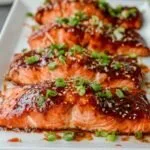
Gochujang Salmon
Equipment
-
Foil-lined baking sheet
-
Mixing bowl
-
Whisk
-
Meat thermometer
Ingredients
- 3 tbsp gochujang (Korean chili paste) Start with 1.5 tbsp for less heat; use gluten-free gochujang if needed
- 0.5 tsp garlic powder
- 2 tsp low-sodium soy sauce Substitute coconut aminos or tamari for gluten-free
- 2 tsp honey Substitute maple syrup, brown sugar, or oligo syrup
- 1 tbsp rice wine vinegar Substitute lemon juice, white wine vinegar, or apple cider vinegar
- 1.5 tsp sesame oil
- 0.5 tsp salt
- 0.25 tsp black pepper
- 1.5 lbs salmon fillets Skin-on recommended; cut into 4 to 6 oz portions. Wild salmon preferred; look for ASC logo on farmed salmon.
- 1 tsp sesame seeds For garnish
- 2 tbsp green onion, thinly sliced For garnish
Instructions
-
In a mixing bowl, whisk together the gochujang, garlic powder, soy sauce, honey, rice wine vinegar, sesame oil, salt, and pepper until the glaze is smooth and fully combined. Taste and adjust seasoning if needed.
-
Pat the salmon fillets completely dry with a paper towel and place them skin-side down on a foil-lined baking sheet. Spoon the glaze evenly over each fillet, spreading it all the way to the edges.
-
Position the oven rack 6 to 8 inches from the broiler element. Preheat the broiler fully before adding the salmon. Placing fish under a cold broiler will steam it rather than caramelize the glaze.
-
Once the broiler is fully preheated, slide in the baking sheet. Broil for 5 to 7 minutes, rotating the pan halfway through. If the glaze darkens too fast, move the pan to a lower rack immediately. Thinner fillets under 1 inch are typically done in 4 to 5 minutes; thicker fillets may need 7 to 8 minutes.
-
The salmon is done when it flakes easily with a fork or reads 125 to 130°F on a meat thermometer for medium-rare, or 145°F for fully cooked. Let it rest for 5 minutes. Garnish with sesame seeds and sliced green onion before serving.