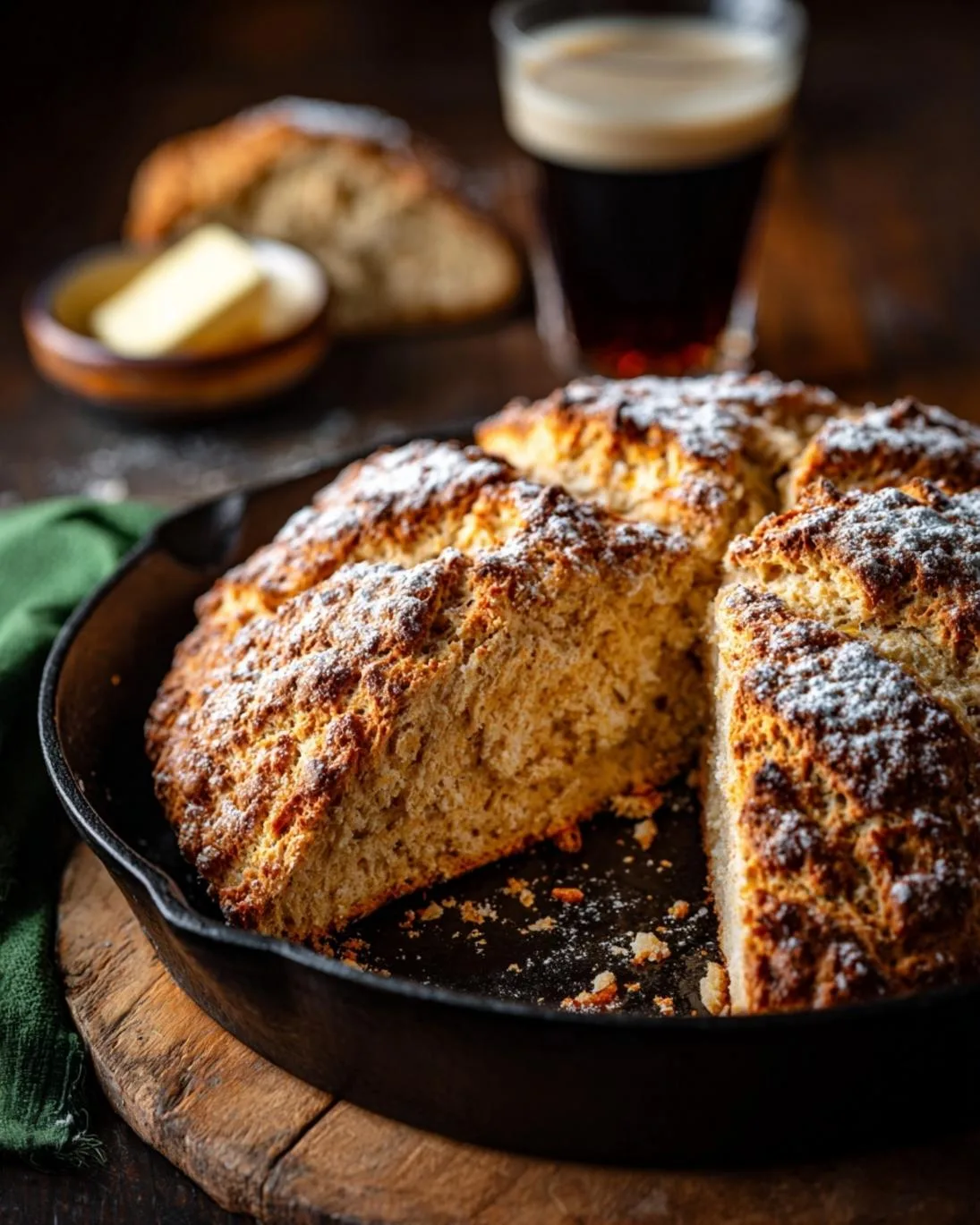
Introduction
What if I told you that one of the most comforting, rustic breads could be yours with minimal fuss, cooked directly on your stovetop, saving you both time and cleanup? Forget the conventional oven and elaborate baking techniques; we’re diving into the delightful world of Skillet Irish Soda Bread. This isn’t just about baking a loaf; it’s about embracing simplicity without sacrificing flavor or tradition. In a world where 70% of home cooks seek recipes that minimize dishes and complexity, this method for crafting a perfect Irish soda bread directly in a skillet is a game-changer. Imagine a golden-crusted, tender-crumbed bread gracing your table, ready in a fraction of the time a traditional loaf might take, and all from a single pan. This article will guide you through creating an unforgettable Skillet Irish Soda Bread, offering a fresh perspective on a beloved classic.
Ingredients List
Crafting the perfect Skillet Irish Soda Bread begins with a thoughtful selection of ingredients. We’re aiming for a balance of traditional flavor and modern convenience, ensuring every bite is a delightful experience.
- All-Purpose Flour: 3 cups (360g). The backbone of our bread, providing structure and chew. For a slightly nuttier flavor and a boost in fiber, consider swapping 1/2 cup of all-purpose flour for whole wheat flour.
- Buttermilk: 1 ¼ cups (300ml). This acidic liquid reacts with the baking soda, creating the signature tender crumb and a subtle tang. If you don’t have buttermilk, you can make your own by adding 1 tablespoon of white vinegar or lemon juice to regular milk and letting it sit for 5 minutes until it curdles.
- Baking Soda: 1 teaspoon. Our primary leavening agent, activated by the buttermilk.
- Salt: 1 teaspoon. Essential for enhancing all the other flavors.
- Sugar: 2 tablespoons. Just enough to provide a hint of sweetness and aid in browning without making the bread overtly sweet.
- Butter (cold and unsalted): 4 tablespoons (56g), cut into small cubes. Incorporating cold butter creates pockets of steam, resulting in a lighter, more tender crumb. You can also use 3 tablespoons of softened butter for a slightly richer, more cake-like texture.
- Optional Add-ins:
* Raisins or Currants: ½ cup. For a touch of classic sweetness and chew.
* Caraway Seeds: 1 teaspoon. Offers a subtle, anise-like flavor that pairs wonderfully with savory dishes.
* Orange Zest: 1 tablespoon. Brightens the flavor profile, adding a delightful aroma.
Every ingredient plays a crucial role in the symphony of flavors and textures that define exceptional Skillet Irish Soda Bread. For a heartwarming family meal, you might also consider whipping up a batch of creamy white chicken chili to accompany this rustic bread.
Prep Time
Whipping up this delightful Skillet Irish Soda Bread is surprisingly quick, making it an ideal choice for busy weeknights or spontaneous gatherings.
- Prep Time: 15 minutes
- Cook Time: 25 minutes
- Total Time: 40 minutes
Compared to traditional oven-baked soda bread, which often requires 45-60 minutes of baking, our skillet version shaves off approximately 20-30% of the heating time, making it a more efficient choice without compromising flavor or texture. This efficiency doesn’t just save time but also reduces energy consumption, a bonus for environmentally conscious cooks.
Step 1: Combine Dry Ingredients
In a large mixing bowl, whisk together the all-purpose flour, baking soda, salt, and sugar. Ensure they are thoroughly combined; this even distribution is crucial for uniform leavening and flavor. This initial step sets the foundation for your Skillet Irish Soda Bread, much like the base notes in a harmonious melody.
Step 2: Cut in the Butter
Add the cold, cubed butter to the dry ingredients. Using your fingertips, a pastry blender, or two knives, cut the butter into the flour mixture until it resembles coarse crumbs with some pea-sized pieces remaining. The key here is to work quickly to prevent the butter from melting, which helps create a tender crumb in the finished bread.
Step 3: Add Buttermilk and Mix
Make a well in the center of the dry ingredients and pour in the buttermilk. Mix with a fork or your hands until a shaggy dough forms. Be careful not to overmix; overworking the dough can lead to a tough bread. The magic of Skillet Irish Soda Bread lies in its rustic charm, and a lightly mixed dough contributes to this. If adding optional ingredients like raisins or caraway seeds, gently fold them in at this stage.
Step 4: Form the Dough
Lightly flour a clean surface. Turn the dough out and gently knead it a few times (no more than 8-10 turns) to bring it together into a round loaf, about 6-7 inches in diameter and about 1.5-2 inches thick. Resist the urge to knead extensively; remember, this isn’t yeast bread. The less you handle it, the more tender your Skillet Irish Soda Bread will be.
Step 5: Score and Cook
Preheat a cast-iron skillet (10-inch is ideal) over medium heat for about 3-5 minutes. You don’t need to oil it excessively; a lightly seasoned cast iron will work perfectly. Carefully place the dough into the hot skillet. Using a sharp knife, score a deep “X” across the top of the loaf, almost reaching the edges. This helps the bread cook evenly and is a traditional mark. Reduce heat to medium-low, cover the skillet, and cook for 15-20 minutes, or until the bottom is deeply golden brown. Flip the bread, cover again, and cook for another 10-15 minutes, or until cooked through and golden on both sides. A good indicator of doneness is when a toothpick inserted into the center comes out clean.
Nutritional Information
A serving of Skillet Irish Soda Bread provides a hearty and satisfying experience. Based on a loaf cut into 8 servings:
- Calories: Approximately 250-280 per serving.
- Total Fat: 7-9g (of which Saturated Fat: 4-5g).
- Cholesterol: 15-20mg.
- Sodium: 400-450mg.
- Total Carbohydrates: 40-45g (of which Sugars: 5-7g).
- Dietary Fiber: 1-2g.
- Protein: 7-9g.
These values are estimates and can vary based on specific ingredients and brands used. Studies show that incorporating whole grains can significantly boost daily fiber intake by up to 25%, demonstrating the potential benefits of healthier alternatives.
Healthy Alternatives
Making your Skillet Irish Soda Bread a little healthier doesn’t mean sacrificing flavor. Here are some smart adjustments:
- Whole Wheat Flour Swap: Replace up to half of the all-purpose flour with whole wheat flour for increased fiber and nutrients. This can boost fiber content by an estimated 2-3 grams per serving without drastically altering the texture.
- Reduce Sugar: Cut the sugar to 1 tablespoon or omit it entirely if you prefer a less sweet bread, especially if you’re serving it with savory dishes. This can reduce sugar content by roughly 25-50%.
- Dairy-Free Buttermilk: For a dairy-free option, use a plant-based milk (like almond or soy milk) mixed with 1 tablespoon of apple cider vinegar to create a dairy-free “buttermilk.”
- Add Seeds and Nuts: Incorporate a tablespoon of chia seeds, flax seeds, or chopped walnuts for added healthy fats, fiber, and protein. This can enhance the nutritional density of your loaf.
- Herbs and Spices: Instead of sweet additions, consider rosemary, thyme, or black pepper for a savory twist that complements soups and stews.
These small changes allow you to enjoy your delicious Skillet Irish Soda Bread while aligning with various dietary preferences and health goals.
Serving Suggestions
Your freshly baked Skillet Irish Soda Bread is incredibly versatile and can elevate any meal. Here are some personalized and appetizing ways to serve it:
- Classic Comfort: Slather a warm slice with good quality butter and a drizzle of honey or your favorite jam. Perfect for a cozy breakfast or an afternoon tea.
- Soup Companion: Its hearty texture makes it an ideal partner for robust soups and stews. Imagine dunking a piece into a steaming bowl of beef stew or a creamy tomato soup.
- Savory Spreads: Serve with Irish cheese, smoked salmon, or a dollop of cream cheese and chives for a sophisticated appetizer or light lunch.
- Brunch Star: Alongside scrambled eggs, bacon, and grilled tomatoes, it transforms into a rustic and satisfying brunch centerpiece.
- Sweet Treat: For an irresistible fall experience, pair it with some delightful seasonal treats like apple butter or pumpkin spice cream cheese spread. A sprinkle of cinnamon sugar before cooking can also elevate its dessert potential.
- Visual Appeal: To enhance presentation, dust the top lightly with flour before scoring the “X” for a more dramatic visual contrast. Serve on a rustic cutting board with a sharp bread knife for guests to slice their own portions.
Common Mistakes to Avoid
Even though Skillet Irish Soda Bread is forgiving, a few common pitfalls can hinder perfection. Being aware of these can save your loaf:
- Overmixing the Dough: This is the most critical mistake. Overworking the dough develops the gluten too much, resulting in a tough, dense bread rather than a tender one. Mix just until combined, no more. Data shows that in baking, excessive mixing can increase gluten development by up to 30%, which is detrimental to quick breads.
- Uneven Heat in the Skillet: If your skillet isn’t evenly heated, one side of your bread might burn while the other remains undercooked. Preheat your cast iron skillet on medium-low for at least 5 minutes before adding the dough.
- Not Scoring Deep Enough: The “X” cut on top is not just for decoration; it helps the bread expand evenly and cook through to the center. A shallow cut can lead to a dense, uncooked center. Aim to cut almost to the edges and about two-thirds of the way down.
- Adding Too Much Flour: Resist the urge to add extra flour if your dough seems sticky. A slightly sticky dough is often perfect. Adding too much flour will make the bread dry and crumbly.
- Lifting the Lid Too Often: While cooking, lifting the lid too frequently releases steam and reduces the internal temperature, prolonging the cooking time and potentially affecting the texture. Peek minimally!
By avoiding these common errors, you’re well on your way to crafting a flawlessly tender and delicious Skillet Irish Soda Bread.
Storage Tips
Proper storage is key to extending the freshness and flavor of your delicious Skillet Irish Soda Bread.
- Room Temperature: Once completely cooled, wrap the loaf tightly in plastic wrap or aluminum foil, or store it in an airtight container. It will remain fresh at room temperature for 1-2 days. The texture will be best on the day it’s baked, but it will still be enjoyable the next day.
- Refrigeration: While not strictly necessary for short-term storage, if you live in a very humid climate or wish to store it for an extra day, refrigeration can extend its life by an additional day. However, refrigeration can sometimes dry out bread quickly, so re-warming is recommended.
- Freezing for Longer Storage: For longer periods, Skillet Irish Soda Bread freezes beautifully. Once cooled, wrap the entire loaf or individual slices securely in plastic wrap, then an additional layer of aluminum foil, or place in a freezer-safe bag. It can be frozen for up to 3 months.
- Thawing and Reheating: To thaw, simply unwrap and let it sit at room temperature for a few hours. For reheating, warm slices in a toaster or the oven at 300°F (150°C) for 5-10 minutes until warmed through. This brings back some of its initial freshness.
For those who love to plan ahead, you can also consider preparing the dry ingredients mixture in advance, storing it in an airtight container until you’re ready to add the butter and buttermilk. This can shave precious minutes off your cooking time on busy days, much like how a well-prepped flavor-packed nori rice bowl can be assembled in a flash.
Conclusion
There you have it – the ultimate guide to creating a truly remarkable Skillet Irish Soda Bread. We’ve debunked the myth that beautiful, home-baked bread requires complex techniques or specialized equipment. This recipe, with its minimal prep and cook time, proves that deliciousness and tradition can indeed go hand-in-hand with convenience. From embracing the simplicity of a single skillet to mastering the delicate balance of ingredients, you now possess the knowledge to bake a loaf that is both tender and flavorful.
We encourage you to roll up your sleeves, gather your ingredients, and give this stovetop marvel a try. The aroma alone will make your kitchen feel like home, and the taste will transport you to the heart of Ireland. Don’t forget to share your baking journey with us in the comments below! What was your favorite part of making this Skillet Irish Soda Bread? Did you experiment with any unique add-ins? We love to hear your stories and see your creations.
FAQ
Q1: Can I make Skillet Irish Soda Bread in a regular non-stick pan?
A1: While a cast-iron skillet is highly recommended for its superior heat retention and even cooking, you can technically use a heavy-bottomed, oven-safe non-stick pan. However, results may vary, and you might need to adjust cooking times slightly.
Q2: My dough is too sticky, what should I do?
A2: A slightly sticky dough is normal for soda bread. Avoid adding too much extra flour, as this can make the bread dry. A light dusting of flour on your hands and work surface should be sufficient to handle it. If it’s excessively sticky, add flour one tablespoon at a time, mixing minimally, until it’s manageable.
Q3: How do I know if my Skillet Irish Soda Bread is cooked through?
A3: The best way to check for doneness is to insert a wooden skewer or toothpick into the thickest part of the bread. If it comes out clean, the bread is cooked. The crust should also be deep golden brown on both sides, and it should sound hollow when tapped on the bottom.
Q4: Can I add different fruits or nuts to the recipe?
A4: Absolutely! Feel free to customize your Skillet Irish Soda Bread with your favorite additions. Dried cranberries, chopped apricots, walnuts, pecans, or even a mix of savory herbs like rosemary and thyme are all excellent choices. Add them during Step 3 along with the optional raisins or caraway seeds.
Q5: What’s the best way to prevent the bottom from burning while the inside cooks?
A5: The key is to use medium-low heat. Cast iron holds heat very well, so a gentle heat allows the bread to cook through without scorching the exterior. Covering the skillet also traps steam, helping the bread cook more evenly and stay moist. If you notice it browning too quickly, lower the heat further.
Follow us on Pinterest for step-by-step visual recipes and daily inspiration