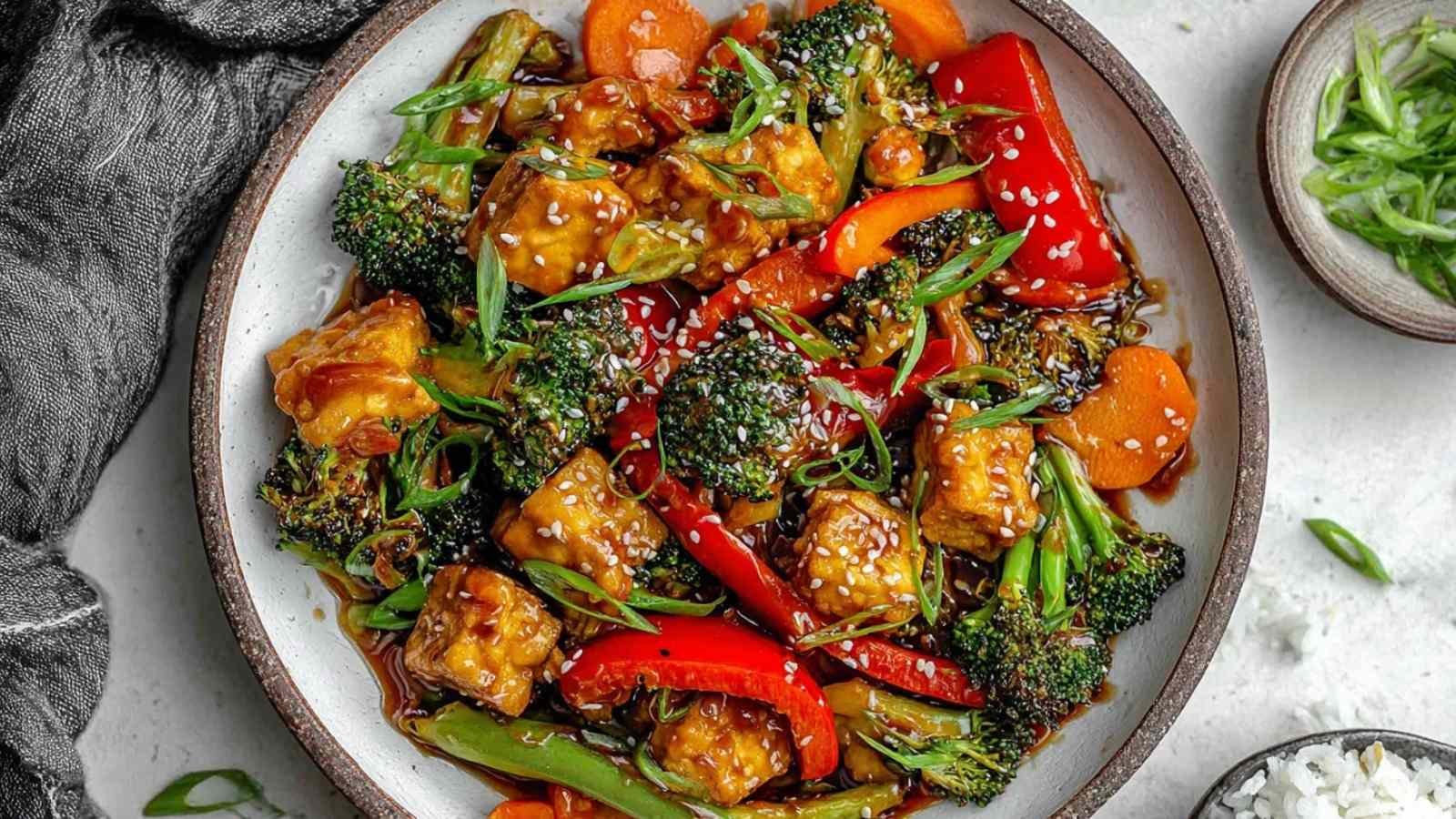
This high protein tempeh stir-fry is the plant-based dinner that finally made my teenagers stop asking where the chicken was. At over 40 grams of protein per serving, it is bold, saucy, and ready in 30 minutes. Proof that plant-based eating does not mean sacrificing flavor or fuel.
I will be honest: my first few attempts at tempeh stir-fry were fine. Not exciting, not terrible, just fine. Then I doubled the tempeh, threw in edamame, and everything clicked. Now this is on our weekly rotation without a single complaint from the peanut gallery.
The sauce is rich and savory. The tempeh gets perfectly golden and crispy. The vegetables stay tender with just the right bite. This high protein tempeh stir-fry hits every note: satisfying, nourishing, and genuinely delicious.
Table of Contents
Ingredients for High Protein Tempeh Stir-Fry
I have tested this recipe more times than I can count, and these exact quantities are what make it work. The combination of doubled tempeh plus edamame is what pushes this into serious high-protein territory. Do not be tempted to cut corners here.
Stir-Fry Sauce:
- 1 tbsp cornstarch
- 2 tbsp water
- 1 vegetable bouillon cube
- 1/4 cup boiling water
- 3 tbsp soy sauce (I recommend low-sodium if you are watching your salt intake)
- 1 to 2 tbsp sugar or agave
- 2 tsp sesame oil (my preference is toasted sesame oil for deeper, nuttier flavor)
- Red pepper flakes, to taste
Tempeh and Vegetables:
- 3 tbsp high-heat oil, divided
- 2 packages tempeh, cut into bite-size rectangles (pat them dry before cooking for the best sear, pro tip)
- 1 cup shelled edamame, thawed if frozen (in my experience, frozen works perfectly fine here)
- 2 cups broccoli florets
- 1 red bell pepper, diced
- 1 medium onion, sliced
- 2 tsp minced ginger
- 2 garlic cloves, minced
Garnish (optional):
- Sesame seeds
- Sliced green onions

Step-by-Step Instructions
I recommend reading through all the steps before you start. This one moves quickly once the pan is hot, and having everything prepped ahead makes a real difference in how the final dish comes together.
Step 1: In a small bowl, whisk together the cornstarch and 2 tbsp water until smooth. Dissolve the bouillon cube in 1/4 cup boiling water, then pour it into the cornstarch mixture. Add the soy sauce, sugar or agave, sesame oil, and red pepper flakes. Whisk until fully combined and set aside.
Step 2: Heat 1 and 1/2 tbsp oil in a large pan or wok over medium-high heat. Add the tempeh in a single layer. Leave it completely undisturbed for 3 to 5 minutes until deeply golden and well-browned. Resist the urge to stir. Remove the cooked tempeh from the pan and set aside. If your pan is small, cook the tempeh in two batches to avoid overcrowding.
Step 3: In the same pan over medium heat, add the remaining oil. Add the broccoli, bell pepper, and onion. Cook for 5 minutes, stirring regularly, until the vegetables are tender-crisp with light color on the edges.
Step 4: Add the minced ginger and garlic. Cook for 2 to 3 minutes until fragrant. Your kitchen is going to smell incredible at this point.
Step 5: Stir in the edamame and cook for 1 to 2 minutes until heated through.
Step 6: Add the tempeh back to the pan and pour in the stir-fry sauce. Toss everything well to coat evenly. Cook for 5 minutes, stirring occasionally. If the sauce thickens too quickly, add a small splash of water or vegetable broth to loosen it up.
Step 7: Serve immediately over your base of choice and garnish with sesame seeds and sliced green onions.
What to Serve with High Protein Tempeh Stir-Fry
The best sides for this stir-fry balance the bold, savory sauce while adding texture, fiber, and even more protein to the plate. Here are my favorite pairings.
High Protein Pasta or Edamame Noodles: These are my go-to for maximum protein in one bowl. They soak up the sauce beautifully and keep you full for hours. If you love noodle-based stir-fry dishes, my Shrimp Stir-Fry with Noodles uses a similar approach and is a great companion recipe.
Soba Noodles: Buckwheat-based soba noodles are naturally higher in protein than regular noodles and have a hearty, nutty flavor that pairs perfectly with this sauce.
Brown Rice or Quinoa: A classic pairing that adds fiber and complex carbs to balance the protein-rich stir-fry. If you enjoy rice bowls, my Healthy Chicken Stir-Fry Skillet served over brown rice is another weeknight favorite worth bookmarking.
Tofu and Vegetable Stir-Fry Base: If you want to go fully plant-based and keep the Asian flavor profile going, my Tofu Vegetable Stir-Fry with Peanut Sauce works beautifully as a side or a complementary main for a bigger spread.
Crispy Garlic Chicken Fried Rice: For households where not everyone is plant-based, my Easy Crispy Garlic Chicken Fried Rice makes a crowd-pleasing partner dish on the same table.
High Protein Vegan Thai Green Curry: If you are doing a full plant-based dinner night, pair this stir-fry with my High Protein Vegan Thai Green Curry for a complete, restaurant-worthy spread.

Storage and Serving Tips
Store leftovers in an airtight container in the refrigerator for up to 4 days. I recommend keeping the stir-fry separate from your base (rice, noodles, etc.) for the best texture throughout the week. The components hold up much better stored apart.
To reheat, warm in a pan over medium heat with a small splash of water to loosen the sauce. The stovetop keeps the tempeh from turning rubbery, which tends to happen in the microwave. If you are reheating from cold, give it 5 to 7 minutes over medium-low heat and stir gently.
Pro tip: the stir-fry sauce can be made ahead and stored in the fridge for up to a week. On busy weeknights, having the sauce ready cuts your active cooking time significantly. Freezing the finished stir-fry is not recommended since the vegetables tend to get mushy when thawed.
Conclusion
This high protein tempeh stir-fry is one of those recipes that genuinely surprises people. Bold flavor, satisfying texture, and 41 grams of plant-based protein per serving. Whether you are cooking for yourself or trying to win over a skeptical family, this recipe delivers every single time. Give it a try this week and let me know what your crew thinks. I have a feeling it is going to become a regular in your rotation too.

High Protein Tempeh Stir-Fry
Equipment
-
Large pan or wok
-
Small bowl
-
Whisk
-
Measuring spoons and cups
Ingredients
- 1 tbsp cornstarch
- 2 tbsp water for cornstarch slurry
- 1 vegetable bouillon cube
- 0.25 cup boiling water to dissolve bouillon
- 3 tbsp soy sauce low-sodium recommended
- 2 tbsp sugar or agave adjust to taste, start with 1 tbsp
- 2 tsp sesame oil toasted sesame oil preferred
- red pepper flakes to taste
- 3 tbsp high-heat oil divided
- 2 packages tempeh cut into bite-size rectangles, patted dry
- 1 cup shelled edamame thawed if frozen
- 2 cups broccoli florets
- 1 red bell pepper diced
- 1 medium onion sliced
- 2 tsp minced ginger
- 2 garlic cloves minced
- sesame seeds optional garnish
- sliced green onions optional garnish
Instructions
-
In a small bowl, whisk together the cornstarch and 2 tbsp water until smooth. Dissolve the bouillon cube in 1/4 cup boiling water, then pour into the cornstarch mixture. Add the soy sauce, sugar or agave, sesame oil, and red pepper flakes. Whisk until fully combined and set aside.
-
Heat 1 and 1/2 tbsp oil in a large pan or wok over medium-high heat. Add the tempeh in a single layer. Leave undisturbed for 3 to 5 minutes until deeply golden and well-browned. Remove cooked tempeh from the pan and set aside. Cook in two batches if needed to avoid overcrowding.
-
In the same pan over medium heat, add the remaining oil. Add the broccoli, bell pepper, and onion. Cook for 5 minutes, stirring regularly, until vegetables are tender-crisp.
-
Add the minced ginger and garlic. Cook for 2 to 3 minutes until fragrant.
-
Stir in the edamame and cook for 1 to 2 minutes until heated through.
-
Add the tempeh back to the pan and pour in the stir-fry sauce. Toss well to coat everything evenly. Cook for 5 minutes, stirring occasionally. Add a small splash of water or broth if the sauce thickens too quickly.
-
Serve immediately over brown rice, quinoa, soba noodles, or high protein pasta. Garnish with sesame seeds and sliced green onions if desired.